

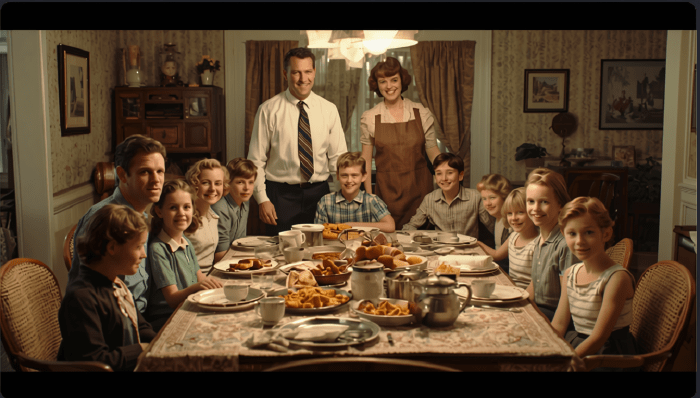
For many Americans who came of age during the 1940s, 1950s, and early 1960s, growing up in a large family was not unusual. Households with five, six, or even ten children could be found in towns, cities, and rural communities across the country. While modern families often have fewer children and more individual space, life in a large mid-century American family was defined by togetherness, shared responsibilities, and a strong sense of belonging.
The experience was far from perfect. Privacy was limited, resources were often stretched, and sibling rivalries could be intense. Yet for many who lived it, growing up in a large family created memories and values that lasted a lifetime.
One of the defining characteristics of a large family was the constant presence of people. There was almost always someone to talk to, play with, argue with, or learn from. Children rarely experienced loneliness because siblings were built-in companions. Whether they were playing baseball in a vacant lot, riding bicycles through the neighborhood, or creating games from imagination alone, there was usually a brother or sister ready to join in.
Homes were often crowded by today’s standards. Multiple children might share a bedroom, and personal possessions were limited. Hand-me-down clothing was common, passing from the oldest child down through younger siblings. Toys, books, and even bicycles were shared. While children sometimes wished for something that belonged solely to them, these circumstances taught lessons about cooperation, patience, and compromise.
Daily life in a large family required teamwork. Parents depended on older children to help care for younger brothers and sisters. Chores were divided among family members, and everyone was expected to contribute. One child might wash dishes while another swept floors or helped prepare meals. In rural areas, children often assisted with farm work or household tasks essential to family life.
These responsibilities helped children develop independence at an early age. Older siblings learned leadership skills as they cared for younger family members, while younger children benefited from having multiple role models close at hand. Family members often developed strong bonds through the shared experience of working together.
Mealtimes were central to family life. Gathering around the dinner table provided an opportunity to reconnect after a busy day. Conversations ranged from school experiences to neighborhood news and family plans. Meals were generally simple and home-cooked, reflecting the era’s emphasis on practicality and thrift.
Financial realities often shaped family life. Many mid-century families lived on a single income, and parents worked hard to provide necessities. Children learned the value of money because luxuries were relatively rare. New clothes, bicycles, or special treats were often reserved for birthdays, Christmas, or other significant occasions.
Yet many adults who grew up during this period remember feeling rich in ways that had little to do with material possessions. Family gatherings, neighborhood friendships, church events, school activities, and community celebrations provided a sense of connection that helped define childhood. Entertainment was often simple but meaningful. Families gathered around the radio or television, played board games, attended local events, or spent evenings talking on the front porch.
The social environment of mid-century America also contributed to the experience of growing up in a large family. Neighborhoods tended to be close-knit, and children spent much of their free time outdoors. Parents often knew their neighbors well, and communities shared responsibility for watching over local children. Kids roamed freely, returning home when streetlights came on or when called in for dinner.
In large families, birthdays, holidays, and family reunions were especially memorable. Celebrations were lively affairs filled with laughter, noise, and activity. Christmas mornings could feel magical as children gathered around the tree, eager to discover what surprises awaited them. Thanksgiving dinners often brought extended family together, strengthening bonds across generations.
Of course, growing up in a large family also presented challenges. Competition for attention was inevitable. Older children sometimes carried heavy responsibilities, while younger siblings occasionally struggled to be noticed. Conflicts arose over shared spaces, borrowed belongings, and differing personalities. Parents faced the difficult task of balancing individual needs within a bustling household.
Despite these challenges, many former members of large families recall a deep sense of security. They knew they belonged to something larger than themselves. They learned to navigate relationships, solve conflicts, and support others. The family served as a training ground for life, teaching resilience, empathy, and cooperation.
Today, as family structures continue to evolve, the memories of growing up in a large family during mid-century America offer a fascinating glimpse into a different era. Those households may have lacked many modern conveniences, but they often possessed an abundance of human connection. In crowded homes filled with laughter, arguments, chores, and shared experiences, children learned lessons that shaped their character for decades to come. For many who lived through it, the greatest gift of a large family was not the number of people under one roof, but the lifelong relationships and enduring sense of belonging that emerged from sharing life together.