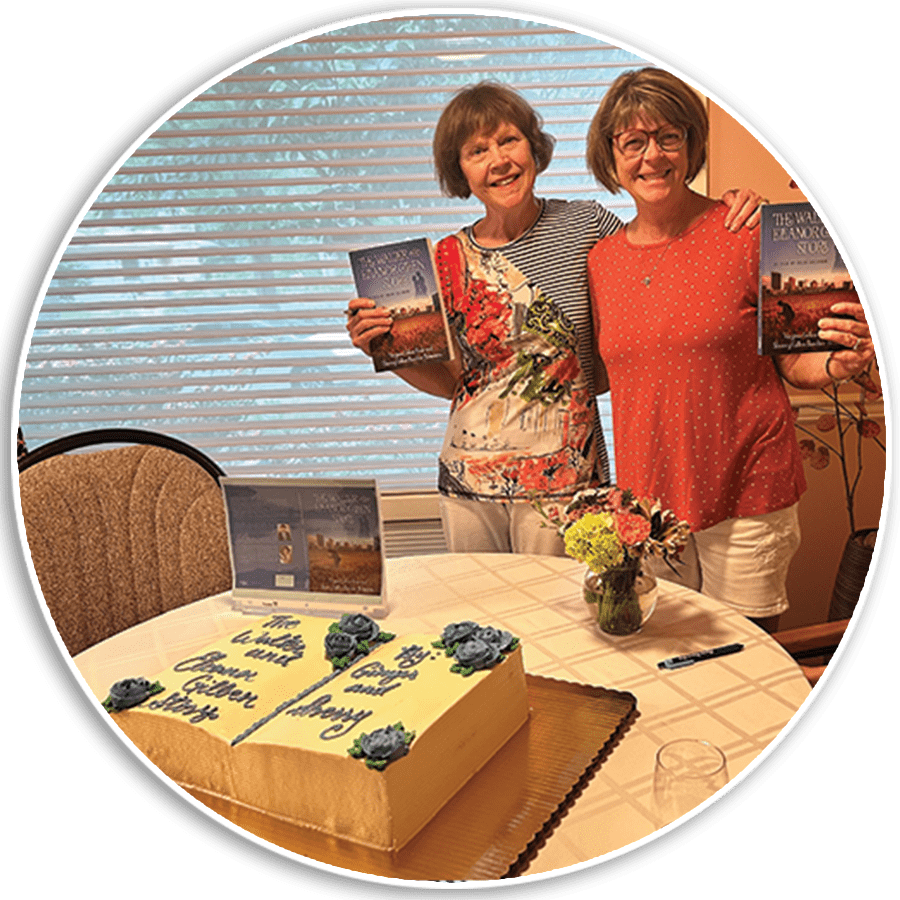

Book signing photo at Pohick Episcopal Church Virginia June 2, 2026
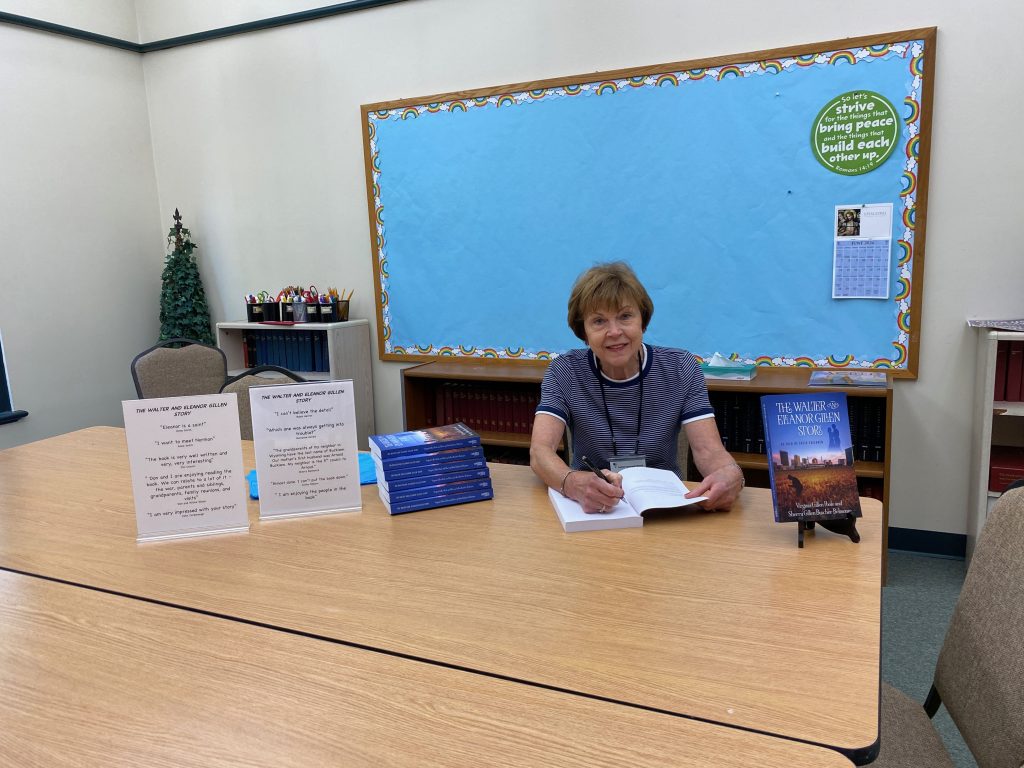
Eleanor, 28, has been a reclusive widow for six years when her mother Martha persuades her to attend a social event at the Odd Fellows Hall in Toledo, Ohio.
It is 1946 and the Odd Fellows Hall is filled with people dancing to a live band. It is late in the evening when Walter walks in wearing his U. S. Navy uniform. He notices Eleanor, sitting quietly across the room and asks her to dance. A whirlwind romance begins.
Seven months later in November 1946, Walter and Eleanor marry and rent a farm near Walter’s parents. My sisters, Irene, Cathy, Velma and Noreen were born here. Velma dies the day after her birth. When Walter’s parents pass in 1950, Walter and Eleanor (Mom and Dad) move to the farm house to help Uncle Leslie. The rest of my siblings are born here. Virginia, Linda, Norman, and the twins Gary and Sherry.
Dad and Uncle Leslie auction off the farm in 1959 and we move to a 180-acre farm in Brooklyn, Michigan. Uncle Leslie moves to Wauseon, Ohio.
The farm is spacious for parents, relatives, and children to explore and grow. Playmates and extra parenting are built in. Elders provide answers on farm and animal life and growing-up questions. They reprimand us children who display attitude, behavior, or chore problems.
There are a many anecdotes in the book that tell of playing in the farm building, “helping” with the harvest, and getting hurt.
Dad is a tool and die maker on second shift. During the day he works the farm. We raise chickens, hogs, and sheep and have to help with chores. Uncle Cletus’ son Gene helped Dad plant the fields. A few years later the Government required the fields to lie fallow. When Dad is allowed to plant again, he rents out the fields due to his failing health.
We all help weed and harvest two large gardens and pick cherries in our orchard. Dad teaches us how to pick raspberries along the fence lines; recognize huckleberry, hickory, walnut, and sassafras trees. Dad knows how to pick mushrooms that are good to eat.
The kitchen is a busy place. Mom and dad buy bushels of tomatoes, peaches, corn, apples, and beans for canning. We all help with this big job. Mom shops for groceries at Kroger’s on Saturdays. Along with the food purchases she receives S&H Green Stamps which she can exchange for dishes. We buy boxes of powdered detergent and cereal that contain drinking glasses and toys.
Mom loves baking and making desserts. At times she makes and sells doll cakes and wedding cakes, and sugar Easter eggs.
The kitchen table seats 11. Uncle Leslie often joins us. We have assigned seats and must eat what is on our plate. We are allocated assigned chores. We help cook and prepare vegetables. Sometimes we are asked to pick dandelion greens growing in the lawn. We set the table, clear the table, wash, and put away dishes, and sweep the floor.
Mom and Dad buy a small restaurant they name “Eleanor’s Coffee Shop”. For a nickel the Shop’s Coffee Club members can buy coffee and get refills. Mom and one of the children make 10 loaves of bread every week for the Coffee Shop. Mom makes daily specials, pies and cakes. One of the older girls makes 10 dozen donuts every morning before school and on weekends.
Mom and Dad celebrate their 25th wedding anniversary in 1971. They lose the farm the next year and move to a rented house in nearby Onsted. The house was a stop along the Underground Railroad and is haunted. Walter dies in the Veteran’s Administration hospital in Ann Arbor that year.
Four of the girls (Irene, Cathy, Noreen and Linda) remain in the local area. After high school graduation in 1970 Ginger leaves for Minneapolis to attend airline school. She takes a job with the U. S. Navy in Arlington, Va. when Northwest Orient airlines goes on strike. In 1974, Norman enlists in the Navy, and youngest son Gary,18, dies due to muscular dystrophy. Sherry, the youngest child, leaves for college in 1976, and Mom is alone at age 58.
Eleanor lives another 25 years, and her joyful retirement is filled with travel and visits with children and grandchildren. All the children marry and have successful careers and remain close today.
The family is deeply rooted in German values and traditions – sausage, sauerkraut, beer, cars, holiday celebrations, dancing. They share a strict work ethic and believe in a work – life balance. They are punctual. They have a dry sense of humor, are direct and modest, and avoid small talk. They are generous with gifts.
Some of our grandparents and great grandparents were German immigrants and married people with German heritages. One might notice by their names – Johanna, Henrietta, Marguerite, Margaretha, Hermann… Their stories are in the book.
Dad’s maternal great grandparents Robert Malburg and Margaretha Gries were the first members of our family to immigrate in 1852. They traveled as a young married couple with two small sons. Dad’s grandfather Peter Malberg was one of these children.
Mom’s paternal grandparents were August Gutzmer and Johanna Potratz Seeman. As a young girl in Germany Johanna fell in love with August Gutzmer. Her parents forced her to marry a more established man. John Seeman was 25 years older and had an 11-year-old son. When John died, Johanna married August Gutzmer.
Mom’s maternal grandparents Hermann Beneke, Sr. and Henrietta Longenberg had four children while living in Breman, Germany. Henrietta immigrated to America in 1883 with the four children. Mom’s mother Martha was one of these children.