

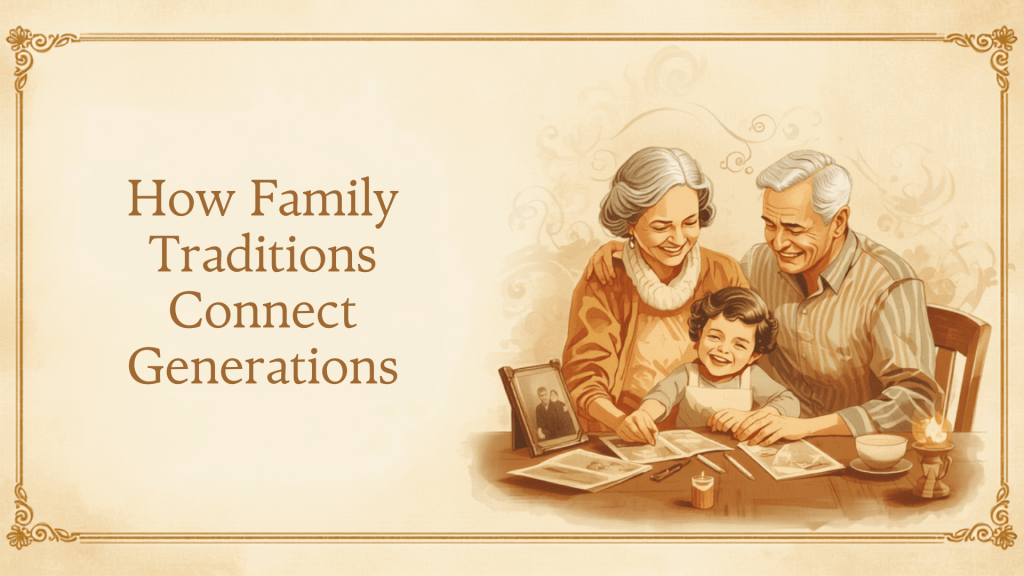
Family traditions create opportunities for shared experiences that become lasting memories. Children often look forward to recurring events because they provide comfort, excitement, and predictability. Whether it is decorating a Christmas tree together, celebrating birthdays in a special way, or gathering for Sunday dinner, these moments become part of a family’s unique story.
As children grow older, they carry these memories with them. Many eventually recreate the same traditions with their own children, creating a bridge between generations. What may seem like a simple activity today can become a cherished family custom tomorrow.
Shared experiences also strengthen emotional bonds. When family members participate in meaningful rituals together, they develop a sense of unity and connection. These experiences often become stories that are retold for years, bringing laughter, reflection, and a sense of continuity.
Preserving Family Values
Traditions are powerful tools for passing down values. Through repeated actions and celebrations, families teach important lessons about respect, gratitude, generosity, faith, perseverance, and love.
For example, a family that volunteers together during the holidays may instill a commitment to helping others. A tradition of expressing gratitude around the dinner table can teach children to appreciate life’s blessings. Even simple customs, such as writing thank-you notes or celebrating personal achievements, communicate values that shape character.
Unlike formal lessons, traditions teach through experience. Children learn not only by hearing about values but by seeing them demonstrated by parents, grandparents, and other relatives. This practical example often leaves a deeper and more lasting impression.
Keeping Family History Alive
One of the most important roles of family traditions is preserving family history. Traditions provide opportunities to share stories about ancestors, significant life events, and cultural heritage.
Many families have customs that include storytelling. Grandparents may recount childhood memories, describe historical events they witnessed, or share stories about relatives who came before them. These conversations help younger generations understand their roots and appreciate the experiences that shaped their family.
Without intentional efforts to preserve family history, valuable stories can be lost over time. Traditions create natural opportunities for these stories to be passed down, ensuring that family legacies remain alive.
Knowing where they come from gives family members a stronger sense of identity. Understanding the struggles, sacrifices, and achievements of previous generations can inspire pride, resilience, and appreciation.
Strengthening Cultural Heritage
For many families, traditions are closely tied to cultural heritage. Food, language, music, celebrations, and religious practices often reflect a family’s cultural background and help preserve important customs.
Cultural traditions provide a sense of continuity in a rapidly changing world. They connect younger generations to their ancestors and help maintain cultural identity even when families move to different regions or countries.
Celebrating cultural traditions can also foster respect for diversity. Children who understand and appreciate their own heritage are often more open to learning about the traditions of others. This awareness promotes empathy, understanding, and a broader perspective on the world.
Creating Stability During Change
Life is filled with transitions. Children grow up, family members relocate, careers change, and loved ones pass away. During times of uncertainty, family traditions can provide comfort and stability.
Familiar rituals offer reassurance because they remain consistent even when other aspects of life change. A yearly family gathering, holiday celebration, or special birthday tradition can create a sense of normalcy and connection during challenging times.
Traditions also help families cope with loss. Continuing a custom that was important to a deceased relative can keep their memory alive and provide comfort to those who miss them. These rituals become meaningful reminders that family bonds endure across generations.
Adapting Traditions for Modern Families
Family traditions do not have to remain unchanged forever. In fact, many traditions evolve as families grow and circumstances shift. The key is preserving the spirit and meaning behind the custom while allowing it to adapt to new realities.
For example, families separated by distance may hold virtual holiday gatherings or create online photo-sharing traditions. Blended families may combine customs from different backgrounds to create new traditions that reflect their unique identity.
What matters most is not the exact form a tradition takes but the connection it fosters. Successful traditions are those that bring family members together and create opportunities for meaningful interaction.
Building a Legacy for Future Generations
Every family has the opportunity to create traditions that will become part of its legacy. These customs do not need to be elaborate or expensive. Often, the simplest traditions become the most meaningful because they focus on spending time together and strengthening relationships.
A monthly game night, an annual family picnic, a holiday baking day, or a tradition of sharing stories at gatherings can become treasured memories that endure for decades. Family traditions connect generations by linking the past, present, and future. They preserve values, celebrate heritage, strengthen relationships, and create a sense of belonging that transcends time. In a world that is constantly changing, traditions remind us of the enduring importance of family and the lasting impact of the connections we share.